2026-07-03
adrian cosentino
During a Gold Rush, What Makes a Good Shovel?
It is everywhere now. Every kind of dev media is being shoveled (sorry) full of the same sloppy content, ads, AI-generated LinkedIn posts, and whatever Gary Tan has decided to post on Twitter this week.
The common theme is always the same:
Everybody is suddenly advocating for turning a two-prompt dump into a multimillion-dollar SaaS.
I believe that we are in a weird spot for software. There are more tools for devs and enterprises than we could ever ask for out there in the world right now, but how are we supposed to know that these tools are actually good, safe, and trustworthy?
Mini Disclaimer
It's tough to talk about how much I love AI while trying to mute the thoughts of those who are on another level of psychosis. I don't want to seem like a hypocrite in this write, because I use AI quite a bit!
Both at work and for personal use, I find it incredibly useful for tedious tasks that I know I am capable of doing, but don't always want to put the time into doing manually.
Keep in mind that I believe code ownership, and being responsible for your own output regardless of which model generated it, is the most important aspect of this evolving era of LOC-maxxing.
A good shovel, you say?
My concern is that we are going to (and already have, to some extent) ruin the image of what it means to be an engineer who puts heart into their work.
The open-source community has already grown skeptical, and not so fond of this new age. You can see that through the ever-growing number of CONTRIBUTING.md files not accepting new PRs.
With the exception of a few products that come to mind, like OpenCode, Beads, and WhisprFlow, I can't really say that most software being released nowadays isn't a dime a dozen.
Trust Is the Product Now
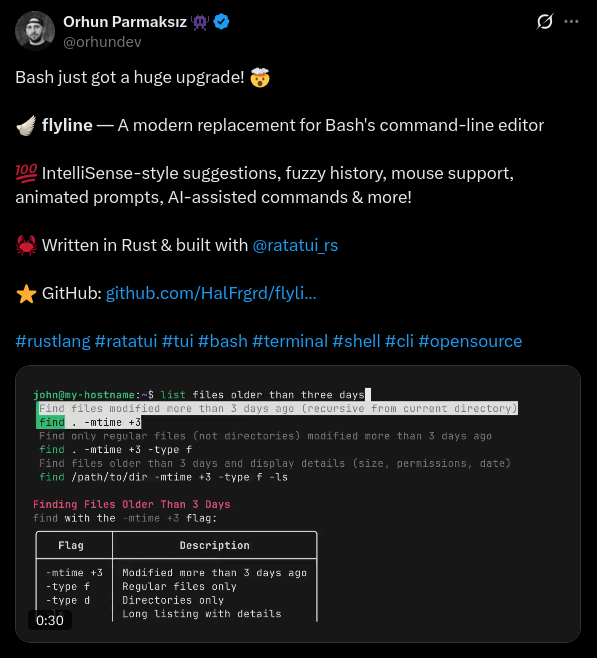
Take this example I found on X:
I think this comment sums public opinion up the best:
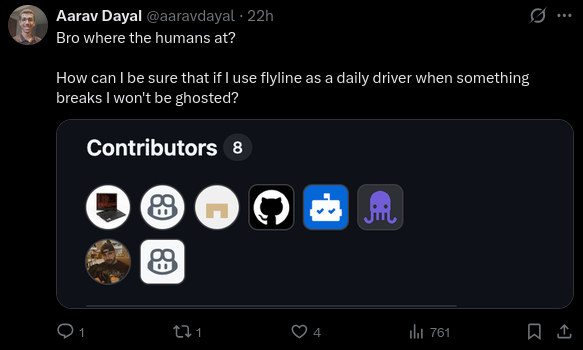
Don't get me wrong, Orhun has built some incredible tools and is a pretty reputable developer. But in today's era, anybody on the planet seemingly could have built the product being advertised. I don't believe this, but it's public opinion, and because of that, trust is becoming less of a guarantee of a product's quality every single day.
This is especially true when the product at hand fits the AI shoe and has it built in. For all that I know, this could be a great "shovel", but I have not yet tried it since it would most likely bloat my workflow more than anything.
The modernization of software publishing and distribution is a can of worms in itself, but more specifically, the path we are treading down in terms of developer and enterprise trust is scary.
That gets even scarier as more people advocate for:
You don't need to review your code.
I think that is the wrong lesson to take from all of this. If anything, the bar for ownership should be higher now because the output is faster, easier, and more convincing than ever.
Build the Thing You Trust
I believe that it's more important than ever to build to solve problems that you have, produce software that you trust, and avoid building only because you want to profit off of it.
I am currently building blipcoard to solve one problem I have had in my current workflow, but I am making sure to go through the proper process to make it a real FOSS project. That way, others who do trust what I produce will have a great experience as well.
When the time comes, and I stumble on a true "million dollar idea", I will take the appropriate steps to build and publish it. But until then, I think it's most important for me as a "no-name" to establish trust and integrity with the developer community such that future releases I may have will be taken seriously and generously.
There is no limit to what you can build in today's world.
But please be responsible, reasonable, and simple.